
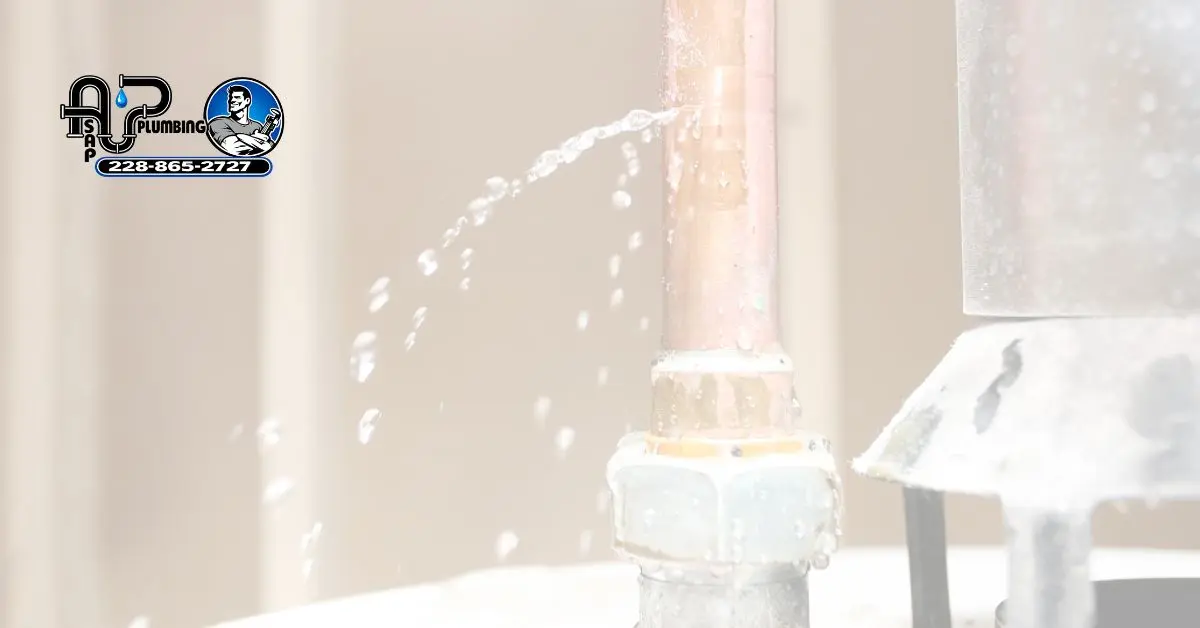
You will usually notice the signs of a hidden leak long before you find the leak itself. The water bill climbs for no reason you can name, or a baseboard stays damp for a week while you wonder whether you are imagining it. By the time people call us at ASAP Plumbing for leak detection, that evidence has been piling up for a while. From there, we follow a set process, with each stage ruling out part of the house before anything gets opened up.
How a leak detection visit works
A leak detection visit starts with questions about what you have noticed and when. We then shut off every fixture and read the water meter to see whether water is still leaving the system. Acoustic equipment, thermal imaging and pressure testing narrow the location, and we mark the spot before anyone cuts into a wall or a floor.
Most of that happens without opening a wall, floor or ceiling. Keeping the opening small is the point of the equipment, because a wrong guess costs you drywall, tile and a second visit. The stages below run the same way whether the water is showing up under a bathroom vanity or somewhere out in the yard.
Step one: your answers and the meter reading
We ask questions before we touch anything. We want to know when you first noticed it and which room it shows up in. We also ask how the water bill has changed over the past three billing cycles and whether the damp spot changes through the day. Those answers rule out whole sections of a house before any equipment comes off the truck. Plenty of leaks get narrowed to one wall in that conversation alone.
The meter test comes next. A meter that keeps creeping with nothing running means water is leaving the system somewhere, and that turns a suspicion into a job with a target. If it holds steady, the source is somewhere else, and we would rather learn that in the first fifteen minutes than after opening a wall.
Step two: sound, heat and pressure narrow the search
Each tool answers a different question, so our technicians at ASAP Plumbing use them together to narrow the search. Acoustic equipment picks up the sound created when pressurized water escapes through a small opening, and that noise carries through tile, hardwood and drywall. Thermal imaging detects surface temperature differences across a wall or floor, which can help reveal areas affected by moisture behind the surface. A pressure test isolates one section of pipe so we can see whether it holds, which points at the line rather than the room.
Acoustic detection
- Picks up the sound of pressurized water escaping through a small opening
- We reach for it on supply lines buried behind tile, drywall or flooring
Thermal imaging
- Picks up temperature differences where water has soaked into a surface
- We reach for it on ceilings, walls and floors where a stain has spread away from its source
Pressure testing
- Picks up whether an isolated section of pipe holds pressure
- We reach for it to confirm which line is failing before anything gets opened
Between the three of them, we can usually narrow the leak to a specific area, so one square of drywall comes out instead of a run of ceiling.
Step three: marking the leak before anything gets opened
Before a tool touches the wall we show you the spot and the readings that led us there, whether that was sound, heat or pressure. If two methods disagree we keep looking, because a guess that gets called a diagnosis costs you more than taking additional time to search. The repair is a separate conversation, and it depends on what the pipe turns out to be doing once it is exposed. Our estimates are free, so you hear that number before deciding on the work.
If you have gone past the wondering stage, call us at (228) 865-2727 and we will get a leak detection visit on the schedule.
Why leaks stay hidden longer on the Gulf Coast
Damp air is the normal state here for months at a time. In Gulfport and Biloxi, high humidity can make it harder to distinguish a minor moisture issue from the normal dampness that comes with the climate. Outdoors it is the same problem, because a wet patch in a yard that has not dried since the last storm does not necessarily point to a plumbing leak.
Water also travels before it surfaces. It runs along a joist or down the outside of a pipe and comes through the ceiling ten feet from the break. That means opening the ceiling directly beneath the stain does not always reveal the source of the leak.
The EPA’s WaterSense program puts household leaks at nearly 1 trillion gallons wasted nationwide every year, with the average household losing more than 9,300 gallons of that. Fixing the easy ones saves about 10 percent on a water bill.
If you are still matching symptoms and are not sure a leak exists at all, our post on scheduling regular leak detection lists the signs worth acting on.
How to get the house ready before we come
Stop using water once you have called, because a running dishwasher throws off the readings we need. Find your main shutoff valve while you wait, since knowing where it sits is the difference between a wet floor and a flooded room. Our guide on shutting off a leak in an emergency covers the usual spots, near the street or down in a crawl space.
Then clear the cabinet under the affected area and the floor around your water heater, because the equipment has to get close to the pipe. Photograph anything that has already dried out, since a stain that faded last week is still evidence. If a symptom only shows at certain hours, say so when you book.
When a leak needs the emergency line instead
Call the emergency line when you cannot stop the water on your own. Water coming through a ceiling, a shutoff valve that will not close or water spreading toward an electrical panel is not a scheduling problem. Our emergency plumbing crews run 24 hours a day for exactly those calls.
Water moving toward an electrical panel, outlets or a breaker box is a call to make from outside the house. Do not wade in to reach the shutoff.
Everything else books like ordinary work, including the stain you have been watching for a month. Our regular service hours run Monday through Saturday, while emergency calls are answered 24 hours a day.
Book leak detection in Gulfport and Biloxi
Call ASAP Plumbing at (228) 865-2727 to book leak detection for your house. We cover Biloxi, Gulfport, Long Beach, Ocean Springs, Pass Christian and Bay St. Louis. We also offer pool leak location, fire line leak detection and sewer pipe locating when the trouble sits outside the house plumbing. Find us at 9465 Creosote Rd, Building 100, Unit J, Gulfport, MS 39503.